最新资讯
Latest News

In the first two years of a child's life, the world is gradually made sense of—step by step, moment by moment.
They begin life in familiar arms, slowly moving towards a wider space; from being cared for, to reaching out and engaging; from dependence, to exploration. These seemingly small shifts form a child's earliest relationship with the world, quietly shaping how they will one day face the unknown.
At Hiba Academy Hangzhou, we place this precious beginning in the care of the Little Welly Class—a programme designed specifically for very young children (12–24 months), opening in October 2026. The programme is strictly limited to just 8 places, ensuring an exceptionally high staff-to-child ratio and deeply individualised attention, so that every Pupil is truly seen, heard and supported as they grow in confidence.
The Little Welly Class integrates the Curiosity Approach, Reggio Emilia and Forest Schools, shifting learning from being "taught" to actively emerging. This is not about "starting school early", but about supporting early development through relationships, safety and exploration.


At Hiba, we firmly believe that when children are held within environments of consistent response, understanding and attentiveness, development unfolds naturally. Security is not something that can be taught—it is built gradually through predictable rhythms of daily life, familiar spaces, stable relationships, and adults who deeply understand early childhood development.
Growing through Rhythm, Familiarity and Belonging
One of the defining features of the Little Welly Class is our emphasis on daily rhythm and a strong sense of familiarity.
For children under two, "routine" is not a rigid timetable, but a trusted sense of how the world works. Knowing what comes next helps young children settle, reduces anxiety, and gradually builds confidence in transitions and change.
In the Little Welly Class, each day follows a calm and predictable rhythm:
·A warm welcome and settling-in time
·Invitation to explore through play-based, open-ended materials
·Tidying up, handwashing, and preparation for snack time
·Group moments such as stories, nursery rhymes or music and movement
Across each part of the day, we carefully support transitions through simple songs, visual cues and consistent verbal guidance, helping children move gently from one experience to the next. Over time, pupil will begin to anticipate familiar routines—choosing to help prepare the snack area after tidying up or returning to a favourite sensory activity.
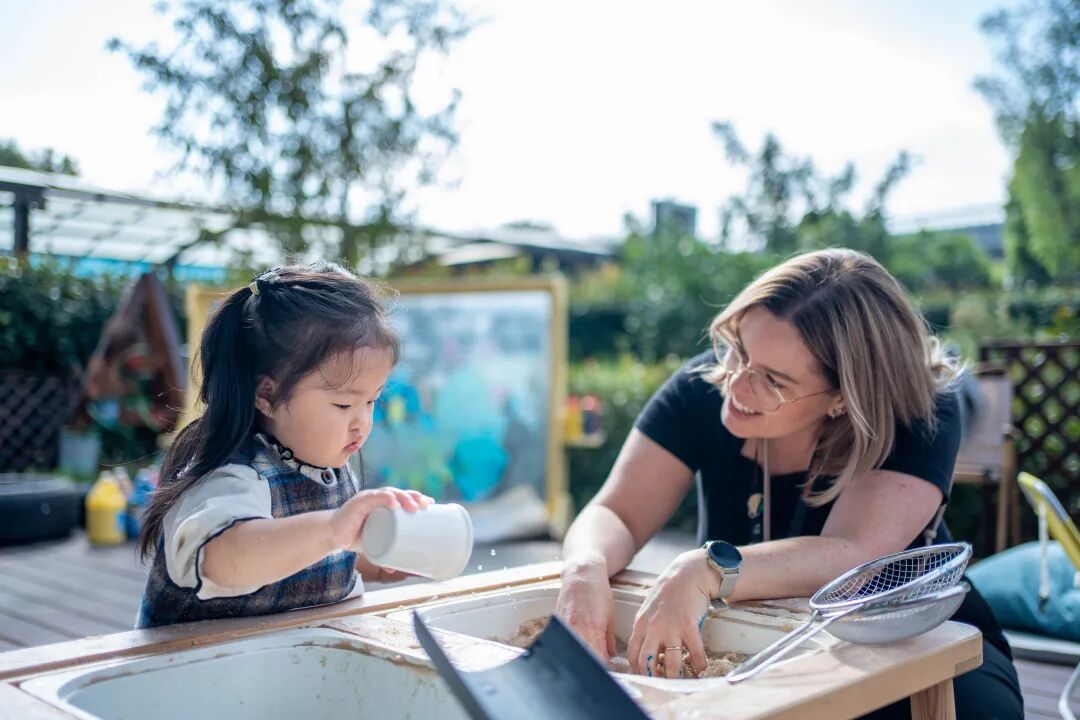

This sense of familiarity extends beyond routine into the environment itself. Returning each day to the same warm space, seeing familiar and friendly adults, and reconnecting with peers all help to build early friendships and a strong sense of belonging. We hope the Little Welly Class becomes a daily highlight—somewhere children feel at ease, and families feel meaningfully connected.
Learning through Play: Sensory, Movement, Creative and Musical Experiences
In the Little Welly Class, learning does not begin with instruction—it begins with play. Carefully designed experiences enable children to engage naturally with the world, gradually building connections between language, movement and emotion.


Sensory exploration is a key "gateway" to learning.
From water and bubbles to varied textures, open-ended resources and sensory discovery trays, children use their whole bodies to explore and understand the world around them. Sensory play not only supports early brain development and curiosity, but also helps build sustained attention. It provides a real context for language development—allowing words such as "wet", "soft" or "cold" to be understood through lived experience.


Building on this foundation, creative activities expand children's modes of expression. Painting, collage, clay and simple craft activities allow pupil to explore colour, material and change. Through repeated experimentation, they begin to understand cause and effect, and develop an early awareness of transformation and outcome.
Music and movement offer another powerful channel of expression. Songs, rhythm and physical movement help children develop a sense of sound, structure and coordination, while also experiencing the joy of shared participation. For very young children, these are not "lessons", but natural languages through which they understand the world and express themselves.

Growing through Connection, Moving forward through Relationships
For children under two, the environment matters—but what truly supports development are stable, responsive relationships. In the Little Welly Class, children gradually come to recognise and trust their teachers and teaching assistants, associating them with safety, joy and emotional security. These early relational experiences help children remain grounded and confident as their world expands.
At the same time, this is a growing community. Parents share experiences and support one another, while children begin to develop early social awareness through observation and imitation. From parallel play, they slowly move towards early interaction. Through festivals and everyday routines, we create age-appropriate shared experiences that help children feel the rhythm of time and build collective memories.


What we value most is not how many skills children acquire, but how they develop in independence, confidence and emotional awareness. They begin to separate briefly from their caregivers, make simple choices, try new things, and communicate needs through language, gesture or gaze. They also begin to learn how to regulate emotions and return to exploration. These capacities form the foundation for all future learning.
Hiba Academy Hangzhou is officially licensed to provide care for children aged 12 to 24 months. From October 2026, the Little Welly Class will run weekday morning sessions, offering a consistent rhythm of learning, stable relationship-building and carefully designed developmental support, all within a low staff-to-child ratio.

Admissions and Enquiries
If you would like to learn more about the Little Welly Class, we warmly welcome your enquiry. Please scan the QR code below to contact our admissions team for the latest availability, programme details and application process. We would also be pleased to discuss your child's current stage of development to support you in making the most appropriate choice.
Age: 12–24 months
Staffing: 2 Chinese teachers + 1 expat teacher
Time: Monday to Friday, 08:15–11:30
Capacity: Maximum of 8 children


Looking ahead, we look forward to seeing children grow steadily within this setting—moving from familiarity and attachment towards exploration and expression, and at the appropriate time, transitioning naturally into the EY1 at our nursery, beginning a richer and broader learning journey.








In the first two years of a child's life, the world is gradually made sense of—step by step, moment by moment.
They begin life in familiar arms, slowly moving towards a wider space; from being cared for, to reaching out and engaging; from dependence, to exploration. These seemingly small shifts form a child's earliest relationship with the world, quietly shaping how they will one day face the unknown.
At Hiba Academy Hangzhou, we place this precious beginning in the care of the Little Welly Class—a programme designed specifically for very young children (12–24 months), opening in October 2026. The programme is strictly limited to just 8 places, ensuring an exceptionally high staff-to-child ratio and deeply individualised attention, so that every Pupil is truly seen, heard and supported as they grow in confidence.
The Little Welly Class integrates the Curiosity Approach, Reggio Emilia and Forest Schools, shifting learning from being "taught" to actively emerging. This is not about "starting school early", but about supporting early development through relationships, safety and exploration.
At Hiba, we firmly believe that when children are held within environments of consistent response, understanding and attentiveness, development unfolds naturally. Security is not something that can be taught—it is built gradually through predictable rhythms of daily life, familiar spaces, stable relationships, and adults who deeply understand early childhood development.
Growing through Rhythm, Familiarity and Belonging
One of the defining features of the Little Welly Class is our emphasis on daily rhythm and a strong sense of familiarity.
For children under two, "routine" is not a rigid timetable, but a trusted sense of how the world works. Knowing what comes next helps young children settle, reduces anxiety, and gradually builds confidence in transitions and change.
In the Little Welly Class, each day follows a calm and predictable rhythm:
·A warm welcome and settling-in time
·Invitation to explore through play-based, open-ended materials
·Tidying up, handwashing, and preparation for snack time
·Group moments such as stories, nursery rhymes or music and movement
Across each part of the day, we carefully support transitions through simple songs, visual cues and consistent verbal guidance, helping children move gently from one experience to the next. Over time, pupil will begin to anticipate familiar routines—choosing to help prepare the snack area after tidying up or returning to a favourite sensory activity.
This sense of familiarity extends beyond routine into the environment itself. Returning each day to the same warm space, seeing familiar and friendly adults, and reconnecting with peers all help to build early friendships and a strong sense of belonging. We hope the Little Welly Class becomes a daily highlight—somewhere children feel at ease, and families feel meaningfully connected.
Learning through Play: Sensory, Movement, Creative and Musical Experiences
In the Little Welly Class, learning does not begin with instruction—it begins with play. Carefully designed experiences enable children to engage naturally with the world, gradually building connections between language, movement and emotion.
Sensory exploration is a key "gateway" to learning.
From water and bubbles to varied textures, open-ended resources and sensory discovery trays, children use their whole bodies to explore and understand the world around them. Sensory play not only supports early brain development and curiosity, but also helps build sustained attention. It provides a real context for language development—allowing words such as "wet", "soft" or "cold" to be understood through lived experience.
Building on this foundation, creative activities expand children's modes of expression. Painting, collage, clay and simple craft activities allow pupil to explore colour, material and change. Through repeated experimentation, they begin to understand cause and effect, and develop an early awareness of transformation and outcome.
Music and movement offer another powerful channel of expression. Songs, rhythm and physical movement help children develop a sense of sound, structure and coordination, while also experiencing the joy of shared participation. For very young children, these are not "lessons", but natural languages through which they understand the world and express themselves.
Growing through Connection, Moving forward through Relationships
For children under two, the environment matters—but what truly supports development are stable, responsive relationships. In the Little Welly Class, children gradually come to recognise and trust their teachers and teaching assistants, associating them with safety, joy and emotional security. These early relational experiences help children remain grounded and confident as their world expands.
At the same time, this is a growing community. Parents share experiences and support one another, while children begin to develop early social awareness through observation and imitation. From parallel play, they slowly move towards early interaction. Through festivals and everyday routines, we create age-appropriate shared experiences that help children feel the rhythm of time and build collective memories.
What we value most is not how many skills children acquire, but how they develop in independence, confidence and emotional awareness. They begin to separate briefly from their caregivers, make simple choices, try new things, and communicate needs through language, gesture or gaze. They also begin to learn how to regulate emotions and return to exploration. These capacities form the foundation for all future learning.
Hiba Academy Hangzhou is officially licensed to provide care for children aged 12 to 24 months. From October 2026, the Little Welly Class will run weekday morning sessions, offering a consistent rhythm of learning, stable relationship-building and carefully designed developmental support, all within a low staff-to-child ratio.
Admissions and Enquiries
If you would like to learn more about the Little Welly Class, we warmly welcome your enquiry. Please scan the QR code below to contact our admissions team for the latest availability, programme details and application process. We would also be pleased to discuss your child's current stage of development to support you in making the most appropriate choice.
Age: 12–24 months
Staffing: 2 Chinese teachers + 1 expat teacher
Time: Monday to Friday, 08:15–11:30
Capacity: Maximum of 8 children
Looking ahead, we look forward to seeing children grow steadily within this setting—moving from familiarity and attachment towards exploration and expression, and at the appropriate time, transitioning naturally into the EY1 at our nursery, beginning a richer and broader learning journey.