最新资讯
Latest News

Preface
On a Saturday morning, William logged into his email at the scheduled release time and found an offer from his first-choice university.
"I was completely stunned. A polar bear crest just popped up and seemed to fall like rain across the screen. I was unbelievably happy—the joy went far beyond anything I'd ever felt before."
This application season, William received offers from several leading institutions overseas. In the United States, he secured admission to Bowdoin College (ranked 5th among U.S. liberal arts colleges by U.S. News), Middlebury College (13th), and the University of North Carolina at Chapel Hill (ranked 26th among National Universities by U.S. News) to study History. In the UK, he received offers for two programmes from University College London (ranked 9th globally by QS).
Among these, Bowdoin's international acceptance rate is only around 1.5% (lower than that of several Ivy League institutions, such as Harvard University at 1.9%, Yale University at 2.5%, and Stanford University at 2%), making it extraordinarily competitive.
According to information from Cuilu Official, Bowdoin College admitted only 11 pupils from China this year. William is not only the only pupil from Zhejiang Province in recent years to receive an offer from the college, but has also been awarded the title of "Faculty Scholar", an honour conferred upon only 100 incoming pupils.

▲
Bowdoin College is a leading liberal arts college that emphasises an elite undergraduate education. It has particular academic strengths in history, government studies, and the social sciences, and is renowned for its rigorous liberal arts training, small class sizes, and cultivation of critical thinking. The college has developed an undergraduate education system that places a strong emphasis on academic depth and intellectual independence.
This modest young man is seen by his teachers as highly self-motivated and disciplined. Focused and warm-hearted, he plays the guitar and appears in almost every school production. He has a sustained and deep interest in the humanities and history, and comes from a supportive, open-minded family that has given him the freedom to explore—allowing him to develop a steady and enduring inner drive.
Behind these offers lies a much earlier-formed trajectory of growth.
William grew up in a family business—an environment shaped by machinery, production, and data. It produced tangible goods and laid cables that carried signals across oceans. In such a world, success could be measured and verified; efficiency and results were the ultimate standards. For a long time, he believed this was the full meaning of "creation".
Things began to change after he watched the musical Hamilton one evening.

▲
Hamilton is a musical based on the life of Alexander Hamilton, the first United States Secretary of the Treasury and a Founding Father. The production received a record-breaking 16 Tony Award nominations and won the Grammy Award for Best Musical Theatre Album as well as the Pulitzer Prize for Drama.
As the lights dimmed and the music began, history suddenly felt alive — no longer confined to the page, but unfolding through rhythm and song on stage. Complex political ideas were delivered rapidly through lyrics; characters' choices unfolded layer by layer through performance. Thought struck the audience first through sound, before settling into understanding.
Walking out of the theatre, he experienced a moment of clarity: the humanities are not a mere supplement to reality—they are a form of "engineering" in their own right. They rewire attention, structure narratives, allow different voices to be heard, and carry emotion across time and space.
If engineering reshapes the physical world, the humanities reshape how we understand it.

It was during this period that William began to find his own way of connecting ideas together. Over nearly seven years at Wellington College Education (China) - Hangzhou, his roles evolved continuously: head of college, founder of the "Dream House" charity initiative, founder of the drama society, and senior member of the school's media platform. These seemingly disparate roles gradually pointed in the same direction—
He was not simply accumulating experiences, but exploring how the world is organised, expressed, and narrated within the diverse platforms Wellington provides.
A Fracture in Perception
In most stories about university applications, "interest" is often treated as a natural starting point: a pupil develops a passion for a subject, pursues it further, and ultimately moves towards a related academic direction. However, when we look back at William's path, this logic does not fully hold. His relationship with history did not begin with passion, but with something earlier—and more difficult to ignore: doubt.
This sense of "doubt" appeared very early.

▲
The Memorial Hall of the Victims of the Nanjing Massacre by the Japanese Invaders is located in Nanjing, Jiangsu Province, and is internationally recognised as one of the three major massacre memorials of the Second World War.
At the age of nine, he visited the Nanjing Massacre Memorial Hall. It was a space shaped by a highly emotional narrative: dim lighting, sombre background music, amplified historical detail, and a reinforced collective memory. In such an environment, most visitors are naturally guided towards a shared emotional response—sadness, heaviness, silence, a reaction that feels almost expected.
Yet within this atmosphere, he experienced a subtle sense of detachment.

As his reading and learning progressed, this fissure gradually widened. As he began to engage with different versions of historical material—textbooks, documentaries, academic articles, and personal memoirs—he gradually realised that the same historical period could take on markedly different forms in the hands of different narrators. Some emphasised macro structures, others focused on individual fates; some employed restrained language, while others were more emotionally charged; some sought to explain, while others deliberately avoided doing so.
The question then became more specific: if history can be told in different ways, is history itself simply a record of facts — or is it shaped by the choices behind how those facts are presented?

During the class, he began to develop an almost instinctive sensitivity to language: what is emphasised and what is omitted; which conclusions are presented outright and which processes are simplified; which terms carry an implicit stance and which strive for neutrality. He gradually came to realise that history is not merely "what happened", but a far more complex structure concerned with how those events are narrated.
The real turning point came during a conversation with his history teacher. When he voiced his uncertainty about the differences between competing narratives, the teacher did not attempt to offer a definitive answer, but instead said something strikingly simple:
"If a narrative feels too complete, go and look at the places where it becomes thin."
It was not a conclusion, but it changed the way he observed.

▲
In October 2023, our Senior School organised a residential trip for Changemaker's Week. William, then in Grade 10, travelled with his classmates to Germany and Poland for a meaningful exploration of IGCSE History.
"We visited Auschwitz-Birkenau. When I first entered the site, I did not feel a strong emotional shock: there was no deliberately constructed narrative of heaviness, but rather a preservation of its original state. It was only when I began noticing details—such as scratch marks on the walls—that I started to understand what my teacher meant by 'starting from the thing itself'. The impact did not come from being guided towards emotion, but from a direct encounter with evidence and detail."
From that moment onwards, William began to consciously focus on these "thin" spaces: gaps in sources, silences within narratives, and details that resist neat categorisation. In these areas, he gradually came to understand that what brings one closest to the essence of history is often not what has already been clearly explained, but what still retains complexity and uncertainty.

▲
Auschwitz concentration camp was one of the largest concentration and extermination camps established by Nazi Germany during the Second World War, and has become a symbol of the systematic persecution and murder of millions of Jews and other victim groups in the Holocaust.
History, therefore, shifted—from a subject to be mastered, to an object to be continuously questioned.
The Boundaries of Narrative
William came to realise early on that understanding the world itself is constructed.
From mysticism and narratives of ancient civilisations to later formal history studies, he has always been drawn to the question of what is truly real. As a child, he developed a strong fascination with mysticism and the supernatural. In particular, content from the Douyin creator "Lao Gao and Xiao Mo", which explored unknown civilisations and ancient legends, prompted him for the first time to actively question human origins and early civilisations. Although such material is not always academically rigorous, it functioned more as a trigger—guiding him towards a path of independent verification and inquiry.
Later, he undertook a month-long foundational study of Sumerian civilisation, reading epics and related sources, and comparing creation narratives across cultures, including ancient Japanese texts, Chinese mythology, and African tribal legends. He gradually noticed that these otherwise independent civilisations shared striking structural similarities in their narratives—for example, representations of a "creator" and imagined accounts of human origins.

▲
Sumerian civilisation is one of the earliest civilisations of humanity, emerging around 4000 BCE in the southern part of the Mesopotamia region. The Sumerians established early city-states such as Uruk, invented cuneiform script, and advanced the development of law, religion, and urban institutions, exerting a profound influence on later civilisations.
This similarity did not provide answers; but instead, it raised deeper questions. If there is no direct historical connection between these narratives, where does this structural consistency come from? Between history and myth, is there an overlap that has yet to be fully explained?
This iterative process of moving back and forth between imagination and verification was, in fact, closely aligned with the methodology he was gradually developing in history: not to accept conclusions first, but to dismantle the structure of narrative itself.
Drama was the earliest domain in which this became a systematic experience.
Through years of study and rehearsal within Wellington, William gradually realised that acting is not simply the repetition of lines, but an entry into another perspective. When an actor attempts to understand a character's motivations, they must construct a complete psychological framework from limited information: why does this person speak in this way? Why do they make this choice at this moment? Beneath seemingly contradictory behaviour, is there a logic that has yet to be revealed?

▲
In our school's 2026 annual musical, The Addams Family, William played the role of Gomez Addams (third from left). With a distinct understanding of the character and an infectious stage presence, he brought this witty and affectionate figure to life in a vivid manner.
During one rehearsal, he repeatedly struggled with a detail: the character he was playing did not respond to a major setback with the expected breakdown, but instead reacted in an almost calm manner. Initially, he believed this was a flaw in the character design. However, through discussion with his teacher, he gradually came to understand that such an "abnormal" response might in fact be closer to a more authentic expression of human nature. Not all emotions are outwardly visible; sometimes restraint itself is a deeper emotional state.
This experience gave him a new understanding of expression: a seemingly complete narrative is not necessarily more truthful; on the contrary, expressions that preserve contradiction and tension often come closer to the complexity of human experience.

▲
On the stage of Performing Arts Night, William crafted a compelling performance centred on the theme of law and justice, combining intellectual depth with artistic expression. The performance not only showcased his solid acting skills but also reflected his concern for and understanding of social issues, bringing an inspiring artistic experience to the entire Wellington community.
When he brought this understanding into his study of history, a strong resonance emerged between the two fields. Historical figures were no longer merely "characters within events", but individuals situated within specific contexts, whose choices, hesitation, and silence all formed part of the narrative. Historical writing itself was no longer a single perspective, but a process of continual selection and reconstruction.
In the National History Day project, he made what appeared to be a non-traditional choice: he gave up writing an essay and instead presented his research through performance. This was not a preference for form, but an extension of method—he transformed his thinking on "multi-perspective historical understanding" into a stage structure, allowing history to be released from text and re-energised through expression.
This approach ultimately earned him first place in the China regional category.

▲
In his performance for the National History Day project, William portrayed John Brown — a radical reformer of the 19th century who steadfastly opposed slavery and advanced the abolitionist movement through direct action, leaving a highly controversial yet profoundly influential mark on American history.
In the Pioneer research project, he chose to focus on the Space Race within the context of the Cold War. Compared with more widely discussed topics, this subject retained significant complexity: technological development, political competition, ideological confrontation, and media narratives were all tightly interwoven, making it a multi-dimensional object of study. During his research, he gradually realised that the same historical event could carry entirely different meanings depending on national narrative frameworks: in some contexts, it was presented as a symbol of scientific breakthrough; in others, it was interpreted as an extension of geopolitical rivalry.

▲
The 'Space Race' typically refers to a series of competitions and confrontations in the field of space exploration between the two superpowers, the United States and the Soviet Union, from the late 1950s to the early 1970s. The central goal was to determine who could achieve and sustain major breakthroughs in space exploration first.
During his studies at the TCR history summer programme, William further expanded his focus to the relationship between political propaganda and structures of power. He analysed propaganda materials from different historical periods, examining language choices, visual symbols, and narrative strategies, and considered how these elements collectively shaped public understanding of events. In doing so, he came to understand that "history" does not exist solely in textbooks; it also exists in posters, film, speeches, and media—in all the ways in which the world is "told".

▲
The TCR History Camp is an intensive academic programme organised by The Concord Review (TCR) — the only quarterly journal in the world dedicated to publishing academic history papers by secondary school students. It aims to help high school students improve their historical research and academic writing skills.
A Higher-Ranked Choice and a Better Fit
William's admission is less a story of "successful ambition" and more one of strong mutual alignment.
As a typical top liberal arts college in the United States, Bowdoin does not prioritise the intensity of knowledge transmission, but rather the continuous cultivation of critical thinking. In small-group seminars, pupils are expected to articulate ideas, respond to others, and refine their own understanding. Interdisciplinary study is the norm rather than the exception, and process-based thinking is often valued more highly than final outcomes.

This environment closely aligns with the learning approach William has already developed at Wellington. He is not seeking a system that provides a fixed pathway, but rather one that allows uncertainty to exist and encourages continuous questioning. In his view, an ideal classroom is not one where knowledge is simply delivered, but one where discussion unfolds around questions, and understanding is gradually approached through the collision of perspectives.
It is from this perspective that he has increasingly been drawn towards liberal arts colleges that genuinely encourage open exploration.
"Compared with Amherst and Williams, which are ranked slightly higher among liberal arts colleges, Bowdoin is a few places lower in ranking. However, what attracts me most is its encouragement of broad academic exploration. For example, beyond my interests in history, film, and drama, I also love music—I enjoy singing and playing the guitar—and I hope to explore subjects such as finance at university. Bowdoin is precisely such a place of freedom, offering pupils fertile ground for growth without imposing limits on their development."

▲
Mr Matt graduated from Princeton University and also serves as a Princeton alumni interviewer, giving him deep insight into US undergraduate applications. He not only engaged in in-depth brainstorming sessions with William on the short essays but also systematically guided him through the preparation process for university interviews.
For William, learning has never been a linear progression along a single track, but an ever-expanding set of possibilities. In this sense, Bowdoin is not an "additional advantage", but a necessary condition—it allows his diverse interests to grow in parallel without being prematurely categorised or constrained.
He has always believed that the choice of major or future direction should not be based solely on safety or clarity of pathway, but should return to a more fundamental question: what sustains genuine long-term enthusiasm. Real interest transforms pressure and challenge into something one can actively engage with, rather than a burden to endure.

▲
William with Scarlett, his university counsellor.
Therefore, in his application process, he deliberately placed less emphasis on rankings and focused more on whether an institution would allow him to continue this way of thinking. From this perspective, Bowdoin is not a "higher goal", but a space that aligns with his intellectual structure and supports ongoing exploration.
Environment as Education Itself
If William's journey is broken down into individual moments, it is easy to interpret them as a sequence of deliberate personal choices. Yet when these fragments are reconnected, a different explanation emerges: many of these decisions were repeatedly triggered by the environments in which he was placed.
In his experience, that environment has always had a clear name—Wellington.
As a boarding pupil, William has been part of the boarding community since Grade 6. This sustained residential experience means that "school" is no longer simply a place where learning happens, but a 24-hour life structure.


▲
The boarding house of Wellington College Education (China) - Hangzhou is what we call 'Ming House'. It serves as both a witness to and a recorder of the children's growth.
Within this rhythm, he gradually learned to manage the balance between study and rest independently, and developed sustained, close relationships with peers through daily shared living, preparing him for future university life.
At Wellington, influence often emerges within the learning process itself. In classrooms, once a question is raised, discussion does not quickly conclude. Ideas are repeatedly voiced, interrupted, challenged, and revised. At first, this pace can feel uncomfortable, as it is difficult to "close" thinking with a standard answer. Yet through this repetition, William gradually realised that expression is not the outcome of thinking—it is the very means through which thinking occurs.

This sensitivity to structure later became the starting point of his understanding of historical narrative.
At Wellington, many things do not begin with being "ready". Whether launching the "Dream House" project or founding a drama society, ideas often begin in an incomplete form. However, within this environment, ideas are pushed into reality and continuously refined through action.
In the process, William frequently encountered situations without clear answers: how to turn ideas into action, how to make decisions amid disagreement, and how to adjust when obstacles arise. These capabilities were not directly taught; rather, they developed through lived experience.

▲
At Wellington's annual event, Summer Carnival·Sea Turtle Music Festival, William served as the pupil host, demonstrating calm and confident stage presence and strong communication skills.
More importantly, these experiences became interconnected. What he learned about perspective-taking in drama rehearsal fed back into his study of history, while his understanding of structure in research influenced how he expressed ideas. Gradually, what initially appeared as separate roles—head of college, project founder, drama participant—came together as a single capability: the ability to understand complex situations and articulate them clearly.
From this perspective, Wellington did not determine his direction, but it enabled something more important: direction could emerge gradually through continuous exploration.
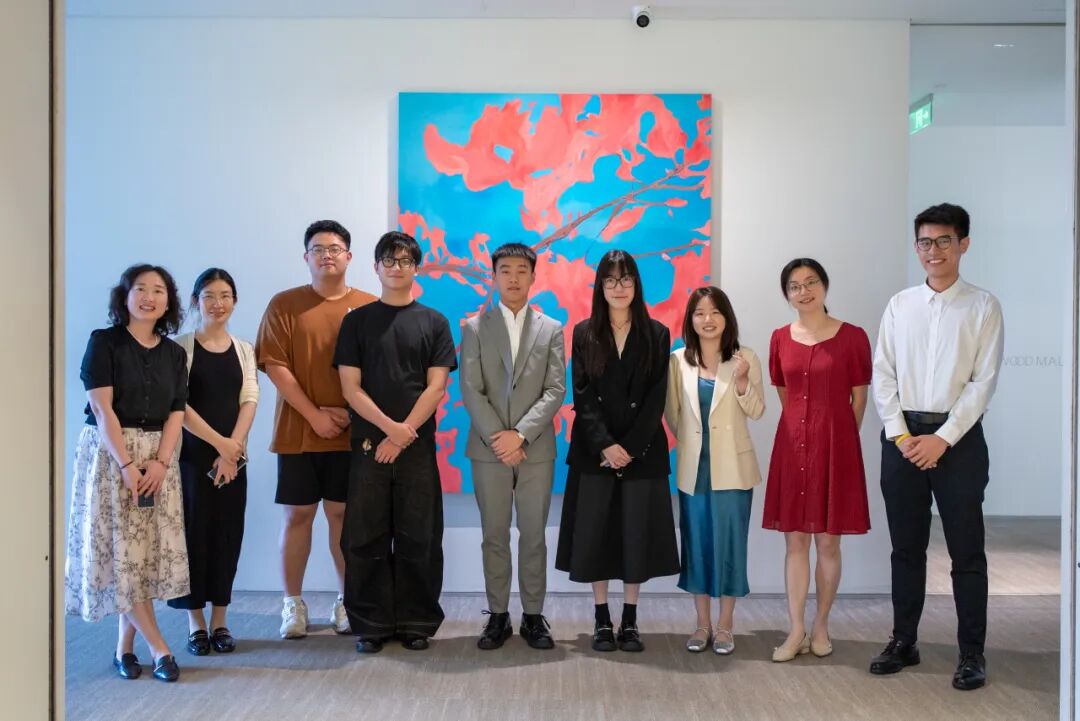
▲
Last summer, with the school's careful organisation and recommendation, William took part in a two-day social practice experience at a well-known 'magic-circle' law firm in China. Although the time was short, this experience opened a window for him to understand the world of law, not only deepening his knowledge of the industry but also prompting him to begin reflecting on his own future direction.
In a New Place, Continuing to Observe the World
In many application narratives, admission is treated as a clear endpoint: it explains what came before and appears to define what comes next.
However, when William's journey is placed within a longer timeline, this moment becomes less definitive.
The abilities he has developed did not begin at this point—they emerged earlier, at moments when he first questioned established narratives, when he compared different historical accounts without finding a single definitive answer, and when he moved between drama and research and gradually realised that understanding itself can take multiple forms.

For this reason, the choice of university is not, in his view, the beginning of certainty. Rather, it is the act of placing himself into a new context—where existing ways of questioning may be disrupted, new perspectives continually emerge, and previously stable understandings may need to be dismantled and rebuilt.
This will not necessarily make things easier; in fact, it may introduce more uncertainty.
Yet, in many ways, this is precisely what he has always done: observe within incomplete clarity, remain patient before conclusions form, and continually adjust his position between different narratives.
With a genuine passion for his chosen field, anticipation for a new stage of life, and the support and understanding of his parents, William now prepares to cross the ocean and arrive in a city that will become his own.
The future is wide open. In classrooms, in libraries, in walks with friends through surrounding towns, and in the histories and narratives that may one day be reshaped by his presence, a pupil's journey is about to begin.


Over these six years, we have had the privilege of watching you grow from a child with bright, clear eyes into a young man of quiet confidence, warmth, and integrity. You have built a strong academic foundation and distinguished yourself in a wide range of school activities. Even more importantly, your maturity, self-discipline, and humility have set you apart and earned the consistent respect and praise of your teachers.
As you embark on the next stage of your journey, you will encounter both promising opportunities and inevitable challenges. There will be moments of clarity and progress, as well as periods of difficulty and uncertainty. Yet I am confident that the sincerity and steadiness within you will keep you grounded, helping you remember where you started while guiding you towards what lies ahead.
Whether you go on to pursue your studies at an Ivy League university or step into the world of entrepreneurship, I wish you every success in building a meaningful and fulfilling path forward, and a future shaped by both ambition and purpose.
Yingnan Wang
Mathematics Teacher
Head of Pastoral Sixth Form

Keep hold of that rare combination of determination and gentleness in you—use the former to take on the world head-on, and the latter to stay compassionate towards it. With both, you will go far, and you will do so with strength and grace.
Cherry Chen
Mathematics Teacher
Grade Leader

It has been a genuine privilege to teach you History since Grade 9. Looking back over the years—from the steady climb through IGCSE to the challenges and triumphs of A Level—I'm struck by how much character you have shown at every stage. We've had our ups and downs, as all meaningful journeys do, but through it all you have remained a consummate professional: composed, dependable, and quietly determined. Every time we've met, you've brought a sense of purpose and good spirit that has brightened my day.
What has always set you apart is not only your ability, but the way you carry it. You are a true gentleman—articulate, thoughtful, and exceptionally talented in how you speak, present yourself, and engage with the world. In History, your eye for detail and your instinct for nuance have consistently shone through. You've never been content with the surface of an argument; you've wanted the "why," the "how," and the human story beneath the facts. That intellectual honesty is rare, and it will take you far.
Beyond the classroom, I've also valued the conversations that made our time together richer: debates about football (even if you are, somehow, a Manchester City supporter), reflections on the vastness of the cosmos, the power of imagination, and the limits—and possibilities—of the human mind. Those discussions reminded me that education at its best is not simply about exams, but about learning how to think, how to wonder, and how to connect ideas across the world.
You have a bright future in whatever endeavour you choose—whether in academia, the arts, or any path that calls for discipline, creativity, and presence. Your talent as an actor and your feel for the arts are gifts, and I hope you continue to develop them with the same seriousness and joy you've brought to your studies. Your hard work has paid off now, and it will continue to pay off in the years ahead.
But as you move into your next chapter, I also want to leave you with a reminder: don't work so hard that you forget to live. Ambition is important, but so is balance. Some of the most rewarding moments are the simplest ones—sitting under a tree with time to think, sharing a good conversation, noticing the world closely, and allowing yourself space to breathe. Those quiet pleasures are not distractions from success; they are part of what makes success worth having.
Wherever life takes you, I hope you remain curious, grounded, and brave enough to keep growing. Keep your standards high, your mind open, and your sense of wonder intact. I'm proud of you, William—and I'm grateful to have been part of your journey.
Mark Wilkinson
Humanities Teacher








Preface
On a Saturday morning, William logged into his email at the scheduled release time and found an offer from his first-choice university.
"I was completely stunned. A polar bear crest just popped up and seemed to fall like rain across the screen. I was unbelievably happy—the joy went far beyond anything I'd ever felt before."
This application season, William received offers from several leading institutions overseas. In the United States, he secured admission to Bowdoin College (ranked 5th among U.S. liberal arts colleges by U.S. News), Middlebury College (13th), and the University of North Carolina at Chapel Hill (ranked 26th among National Universities by U.S. News) to study History. In the UK, he received offers for two programmes from University College London (ranked 9th globally by QS).
Among these, Bowdoin's international acceptance rate is only around 1.5% (lower than that of several Ivy League institutions, such as Harvard University at 1.9%, Yale University at 2.5%, and Stanford University at 2%), making it extraordinarily competitive.
According to information from Cuilu Official, Bowdoin College admitted only 11 pupils from China this year. William is not only the only pupil from Zhejiang Province in recent years to receive an offer from the college, but has also been awarded the title of "Faculty Scholar", an honour conferred upon only 100 incoming pupils.
▲
Bowdoin College is a leading liberal arts college that emphasises an elite undergraduate education. It has particular academic strengths in history, government studies, and the social sciences, and is renowned for its rigorous liberal arts training, small class sizes, and cultivation of critical thinking. The college has developed an undergraduate education system that places a strong emphasis on academic depth and intellectual independence.
This modest young man is seen by his teachers as highly self-motivated and disciplined. Focused and warm-hearted, he plays the guitar and appears in almost every school production. He has a sustained and deep interest in the humanities and history, and comes from a supportive, open-minded family that has given him the freedom to explore—allowing him to develop a steady and enduring inner drive.
Behind these offers lies a much earlier-formed trajectory of growth.
William grew up in a family business—an environment shaped by machinery, production, and data. It produced tangible goods and laid cables that carried signals across oceans. In such a world, success could be measured and verified; efficiency and results were the ultimate standards. For a long time, he believed this was the full meaning of "creation".
Things began to change after he watched the musical Hamilton one evening.
▲
Hamilton is a musical based on the life of Alexander Hamilton, the first United States Secretary of the Treasury and a Founding Father. The production received a record-breaking 16 Tony Award nominations and won the Grammy Award for Best Musical Theatre Album as well as the Pulitzer Prize for Drama.
As the lights dimmed and the music began, history suddenly felt alive — no longer confined to the page, but unfolding through rhythm and song on stage. Complex political ideas were delivered rapidly through lyrics; characters' choices unfolded layer by layer through performance. Thought struck the audience first through sound, before settling into understanding.
Walking out of the theatre, he experienced a moment of clarity: the humanities are not a mere supplement to reality—they are a form of "engineering" in their own right. They rewire attention, structure narratives, allow different voices to be heard, and carry emotion across time and space.
If engineering reshapes the physical world, the humanities reshape how we understand it.
It was during this period that William began to find his own way of connecting ideas together. Over nearly seven years at Wellington College Education (China) - Hangzhou, his roles evolved continuously: head of college, founder of the "Dream House" charity initiative, founder of the drama society, and senior member of the school's media platform. These seemingly disparate roles gradually pointed in the same direction—
He was not simply accumulating experiences, but exploring how the world is organised, expressed, and narrated within the diverse platforms Wellington provides.
A Fracture in Perception
In most stories about university applications, "interest" is often treated as a natural starting point: a pupil develops a passion for a subject, pursues it further, and ultimately moves towards a related academic direction. However, when we look back at William's path, this logic does not fully hold. His relationship with history did not begin with passion, but with something earlier—and more difficult to ignore: doubt.
This sense of "doubt" appeared very early.
▲
The Memorial Hall of the Victims of the Nanjing Massacre by the Japanese Invaders is located in Nanjing, Jiangsu Province, and is internationally recognised as one of the three major massacre memorials of the Second World War.
At the age of nine, he visited the Nanjing Massacre Memorial Hall. It was a space shaped by a highly emotional narrative: dim lighting, sombre background music, amplified historical detail, and a reinforced collective memory. In such an environment, most visitors are naturally guided towards a shared emotional response—sadness, heaviness, silence, a reaction that feels almost expected.
Yet within this atmosphere, he experienced a subtle sense of detachment.
As his reading and learning progressed, this fissure gradually widened. As he began to engage with different versions of historical material—textbooks, documentaries, academic articles, and personal memoirs—he gradually realised that the same historical period could take on markedly different forms in the hands of different narrators. Some emphasised macro structures, others focused on individual fates; some employed restrained language, while others were more emotionally charged; some sought to explain, while others deliberately avoided doing so.
The question then became more specific: if history can be told in different ways, is history itself simply a record of facts — or is it shaped by the choices behind how those facts are presented?
During the class, he began to develop an almost instinctive sensitivity to language: what is emphasised and what is omitted; which conclusions are presented outright and which processes are simplified; which terms carry an implicit stance and which strive for neutrality. He gradually came to realise that history is not merely "what happened", but a far more complex structure concerned with how those events are narrated.
The real turning point came during a conversation with his history teacher. When he voiced his uncertainty about the differences between competing narratives, the teacher did not attempt to offer a definitive answer, but instead said something strikingly simple:
"If a narrative feels too complete, go and look at the places where it becomes thin."
It was not a conclusion, but it changed the way he observed.
▲
In October 2023, our Senior School organised a residential trip for Changemaker's Week. William, then in Grade 10, travelled with his classmates to Germany and Poland for a meaningful exploration of IGCSE History.
"We visited Auschwitz-Birkenau. When I first entered the site, I did not feel a strong emotional shock: there was no deliberately constructed narrative of heaviness, but rather a preservation of its original state. It was only when I began noticing details—such as scratch marks on the walls—that I started to understand what my teacher meant by 'starting from the thing itself'. The impact did not come from being guided towards emotion, but from a direct encounter with evidence and detail."
From that moment onwards, William began to consciously focus on these "thin" spaces: gaps in sources, silences within narratives, and details that resist neat categorisation. In these areas, he gradually came to understand that what brings one closest to the essence of history is often not what has already been clearly explained, but what still retains complexity and uncertainty.
▲
Auschwitz concentration camp was one of the largest concentration and extermination camps established by Nazi Germany during the Second World War, and has become a symbol of the systematic persecution and murder of millions of Jews and other victim groups in the Holocaust.
History, therefore, shifted—from a subject to be mastered, to an object to be continuously questioned.
The Boundaries of Narrative
William came to realise early on that understanding the world itself is constructed.
From mysticism and narratives of ancient civilisations to later formal history studies, he has always been drawn to the question of what is truly real. As a child, he developed a strong fascination with mysticism and the supernatural. In particular, content from the Douyin creator "Lao Gao and Xiao Mo", which explored unknown civilisations and ancient legends, prompted him for the first time to actively question human origins and early civilisations. Although such material is not always academically rigorous, it functioned more as a trigger—guiding him towards a path of independent verification and inquiry.
Later, he undertook a month-long foundational study of Sumerian civilisation, reading epics and related sources, and comparing creation narratives across cultures, including ancient Japanese texts, Chinese mythology, and African tribal legends. He gradually noticed that these otherwise independent civilisations shared striking structural similarities in their narratives—for example, representations of a "creator" and imagined accounts of human origins.
▲
Sumerian civilisation is one of the earliest civilisations of humanity, emerging around 4000 BCE in the southern part of the Mesopotamia region. The Sumerians established early city-states such as Uruk, invented cuneiform script, and advanced the development of law, religion, and urban institutions, exerting a profound influence on later civilisations.
This similarity did not provide answers; but instead, it raised deeper questions. If there is no direct historical connection between these narratives, where does this structural consistency come from? Between history and myth, is there an overlap that has yet to be fully explained?
This iterative process of moving back and forth between imagination and verification was, in fact, closely aligned with the methodology he was gradually developing in history: not to accept conclusions first, but to dismantle the structure of narrative itself.
Drama was the earliest domain in which this became a systematic experience.
Through years of study and rehearsal within Wellington, William gradually realised that acting is not simply the repetition of lines, but an entry into another perspective. When an actor attempts to understand a character's motivations, they must construct a complete psychological framework from limited information: why does this person speak in this way? Why do they make this choice at this moment? Beneath seemingly contradictory behaviour, is there a logic that has yet to be revealed?
▲
In our school's 2026 annual musical, The Addams Family, William played the role of Gomez Addams (third from left). With a distinct understanding of the character and an infectious stage presence, he brought this witty and affectionate figure to life in a vivid manner.
During one rehearsal, he repeatedly struggled with a detail: the character he was playing did not respond to a major setback with the expected breakdown, but instead reacted in an almost calm manner. Initially, he believed this was a flaw in the character design. However, through discussion with his teacher, he gradually came to understand that such an "abnormal" response might in fact be closer to a more authentic expression of human nature. Not all emotions are outwardly visible; sometimes restraint itself is a deeper emotional state.
This experience gave him a new understanding of expression: a seemingly complete narrative is not necessarily more truthful; on the contrary, expressions that preserve contradiction and tension often come closer to the complexity of human experience.
▲
On the stage of Performing Arts Night, William crafted a compelling performance centred on the theme of law and justice, combining intellectual depth with artistic expression. The performance not only showcased his solid acting skills but also reflected his concern for and understanding of social issues, bringing an inspiring artistic experience to the entire Wellington community.
When he brought this understanding into his study of history, a strong resonance emerged between the two fields. Historical figures were no longer merely "characters within events", but individuals situated within specific contexts, whose choices, hesitation, and silence all formed part of the narrative. Historical writing itself was no longer a single perspective, but a process of continual selection and reconstruction.
In the National History Day project, he made what appeared to be a non-traditional choice: he gave up writing an essay and instead presented his research through performance. This was not a preference for form, but an extension of method—he transformed his thinking on "multi-perspective historical understanding" into a stage structure, allowing history to be released from text and re-energised through expression.
This approach ultimately earned him first place in the China regional category.
▲
In his performance for the National History Day project, William portrayed John Brown — a radical reformer of the 19th century who steadfastly opposed slavery and advanced the abolitionist movement through direct action, leaving a highly controversial yet profoundly influential mark on American history.
In the Pioneer research project, he chose to focus on the Space Race within the context of the Cold War. Compared with more widely discussed topics, this subject retained significant complexity: technological development, political competition, ideological confrontation, and media narratives were all tightly interwoven, making it a multi-dimensional object of study. During his research, he gradually realised that the same historical event could carry entirely different meanings depending on national narrative frameworks: in some contexts, it was presented as a symbol of scientific breakthrough; in others, it was interpreted as an extension of geopolitical rivalry.
▲
The 'Space Race' typically refers to a series of competitions and confrontations in the field of space exploration between the two superpowers, the United States and the Soviet Union, from the late 1950s to the early 1970s. The central goal was to determine who could achieve and sustain major breakthroughs in space exploration first.
During his studies at the TCR history summer programme, William further expanded his focus to the relationship between political propaganda and structures of power. He analysed propaganda materials from different historical periods, examining language choices, visual symbols, and narrative strategies, and considered how these elements collectively shaped public understanding of events. In doing so, he came to understand that "history" does not exist solely in textbooks; it also exists in posters, film, speeches, and media—in all the ways in which the world is "told".
▲
The TCR History Camp is an intensive academic programme organised by The Concord Review (TCR) — the only quarterly journal in the world dedicated to publishing academic history papers by secondary school students. It aims to help high school students improve their historical research and academic writing skills.
A Higher-Ranked Choice and a Better Fit
William's admission is less a story of "successful ambition" and more one of strong mutual alignment.
As a typical top liberal arts college in the United States, Bowdoin does not prioritise the intensity of knowledge transmission, but rather the continuous cultivation of critical thinking. In small-group seminars, pupils are expected to articulate ideas, respond to others, and refine their own understanding. Interdisciplinary study is the norm rather than the exception, and process-based thinking is often valued more highly than final outcomes.
This environment closely aligns with the learning approach William has already developed at Wellington. He is not seeking a system that provides a fixed pathway, but rather one that allows uncertainty to exist and encourages continuous questioning. In his view, an ideal classroom is not one where knowledge is simply delivered, but one where discussion unfolds around questions, and understanding is gradually approached through the collision of perspectives.
It is from this perspective that he has increasingly been drawn towards liberal arts colleges that genuinely encourage open exploration.
"Compared with Amherst and Williams, which are ranked slightly higher among liberal arts colleges, Bowdoin is a few places lower in ranking. However, what attracts me most is its encouragement of broad academic exploration. For example, beyond my interests in history, film, and drama, I also love music—I enjoy singing and playing the guitar—and I hope to explore subjects such as finance at university. Bowdoin is precisely such a place of freedom, offering pupils fertile ground for growth without imposing limits on their development."
▲
Mr Matt graduated from Princeton University and also serves as a Princeton alumni interviewer, giving him deep insight into US undergraduate applications. He not only engaged in in-depth brainstorming sessions with William on the short essays but also systematically guided him through the preparation process for university interviews.
For William, learning has never been a linear progression along a single track, but an ever-expanding set of possibilities. In this sense, Bowdoin is not an "additional advantage", but a necessary condition—it allows his diverse interests to grow in parallel without being prematurely categorised or constrained.
He has always believed that the choice of major or future direction should not be based solely on safety or clarity of pathway, but should return to a more fundamental question: what sustains genuine long-term enthusiasm. Real interest transforms pressure and challenge into something one can actively engage with, rather than a burden to endure.
▲
William with Scarlett, his university counsellor.
Therefore, in his application process, he deliberately placed less emphasis on rankings and focused more on whether an institution would allow him to continue this way of thinking. From this perspective, Bowdoin is not a "higher goal", but a space that aligns with his intellectual structure and supports ongoing exploration.
Environment as Education Itself
If William's journey is broken down into individual moments, it is easy to interpret them as a sequence of deliberate personal choices. Yet when these fragments are reconnected, a different explanation emerges: many of these decisions were repeatedly triggered by the environments in which he was placed.
In his experience, that environment has always had a clear name—Wellington.
As a boarding pupil, William has been part of the boarding community since Grade 6. This sustained residential experience means that "school" is no longer simply a place where learning happens, but a 24-hour life structure.
▲
The boarding house of Wellington College Education (China) - Hangzhou is what we call 'Ming House'. It serves as both a witness to and a recorder of the children's growth.
Within this rhythm, he gradually learned to manage the balance between study and rest independently, and developed sustained, close relationships with peers through daily shared living, preparing him for future university life.
At Wellington, influence often emerges within the learning process itself. In classrooms, once a question is raised, discussion does not quickly conclude. Ideas are repeatedly voiced, interrupted, challenged, and revised. At first, this pace can feel uncomfortable, as it is difficult to "close" thinking with a standard answer. Yet through this repetition, William gradually realised that expression is not the outcome of thinking—it is the very means through which thinking occurs.
This sensitivity to structure later became the starting point of his understanding of historical narrative.
At Wellington, many things do not begin with being "ready". Whether launching the "Dream House" project or founding a drama society, ideas often begin in an incomplete form. However, within this environment, ideas are pushed into reality and continuously refined through action.
In the process, William frequently encountered situations without clear answers: how to turn ideas into action, how to make decisions amid disagreement, and how to adjust when obstacles arise. These capabilities were not directly taught; rather, they developed through lived experience.
▲
At Wellington's annual event, Summer Carnival·Sea Turtle Music Festival, William served as the pupil host, demonstrating calm and confident stage presence and strong communication skills.
More importantly, these experiences became interconnected. What he learned about perspective-taking in drama rehearsal fed back into his study of history, while his understanding of structure in research influenced how he expressed ideas. Gradually, what initially appeared as separate roles—head of college, project founder, drama participant—came together as a single capability: the ability to understand complex situations and articulate them clearly.
From this perspective, Wellington did not determine his direction, but it enabled something more important: direction could emerge gradually through continuous exploration.
▲
Last summer, with the school's careful organisation and recommendation, William took part in a two-day social practice experience at a well-known 'magic-circle' law firm in China. Although the time was short, this experience opened a window for him to understand the world of law, not only deepening his knowledge of the industry but also prompting him to begin reflecting on his own future direction.
In a New Place, Continuing to Observe the World
In many application narratives, admission is treated as a clear endpoint: it explains what came before and appears to define what comes next.
However, when William's journey is placed within a longer timeline, this moment becomes less definitive.
The abilities he has developed did not begin at this point—they emerged earlier, at moments when he first questioned established narratives, when he compared different historical accounts without finding a single definitive answer, and when he moved between drama and research and gradually realised that understanding itself can take multiple forms.
For this reason, the choice of university is not, in his view, the beginning of certainty. Rather, it is the act of placing himself into a new context—where existing ways of questioning may be disrupted, new perspectives continually emerge, and previously stable understandings may need to be dismantled and rebuilt.
This will not necessarily make things easier; in fact, it may introduce more uncertainty.
Yet, in many ways, this is precisely what he has always done: observe within incomplete clarity, remain patient before conclusions form, and continually adjust his position between different narratives.
With a genuine passion for his chosen field, anticipation for a new stage of life, and the support and understanding of his parents, William now prepares to cross the ocean and arrive in a city that will become his own.
The future is wide open. In classrooms, in libraries, in walks with friends through surrounding towns, and in the histories and narratives that may one day be reshaped by his presence, a pupil's journey is about to begin.
Over these six years, we have had the privilege of watching you grow from a child with bright, clear eyes into a young man of quiet confidence, warmth, and integrity. You have built a strong academic foundation and distinguished yourself in a wide range of school activities. Even more importantly, your maturity, self-discipline, and humility have set you apart and earned the consistent respect and praise of your teachers.
As you embark on the next stage of your journey, you will encounter both promising opportunities and inevitable challenges. There will be moments of clarity and progress, as well as periods of difficulty and uncertainty. Yet I am confident that the sincerity and steadiness within you will keep you grounded, helping you remember where you started while guiding you towards what lies ahead.
Whether you go on to pursue your studies at an Ivy League university or step into the world of entrepreneurship, I wish you every success in building a meaningful and fulfilling path forward, and a future shaped by both ambition and purpose.
Yingnan Wang
Mathematics Teacher
Head of Pastoral Sixth Form
Keep hold of that rare combination of determination and gentleness in you—use the former to take on the world head-on, and the latter to stay compassionate towards it. With both, you will go far, and you will do so with strength and grace.
Cherry Chen
Mathematics Teacher
Grade Leader
It has been a genuine privilege to teach you History since Grade 9. Looking back over the years—from the steady climb through IGCSE to the challenges and triumphs of A Level—I'm struck by how much character you have shown at every stage. We've had our ups and downs, as all meaningful journeys do, but through it all you have remained a consummate professional: composed, dependable, and quietly determined. Every time we've met, you've brought a sense of purpose and good spirit that has brightened my day.
What has always set you apart is not only your ability, but the way you carry it. You are a true gentleman—articulate, thoughtful, and exceptionally talented in how you speak, present yourself, and engage with the world. In History, your eye for detail and your instinct for nuance have consistently shone through. You've never been content with the surface of an argument; you've wanted the "why," the "how," and the human story beneath the facts. That intellectual honesty is rare, and it will take you far.
Beyond the classroom, I've also valued the conversations that made our time together richer: debates about football (even if you are, somehow, a Manchester City supporter), reflections on the vastness of the cosmos, the power of imagination, and the limits—and possibilities—of the human mind. Those discussions reminded me that education at its best is not simply about exams, but about learning how to think, how to wonder, and how to connect ideas across the world.
You have a bright future in whatever endeavour you choose—whether in academia, the arts, or any path that calls for discipline, creativity, and presence. Your talent as an actor and your feel for the arts are gifts, and I hope you continue to develop them with the same seriousness and joy you've brought to your studies. Your hard work has paid off now, and it will continue to pay off in the years ahead.
But as you move into your next chapter, I also want to leave you with a reminder: don't work so hard that you forget to live. Ambition is important, but so is balance. Some of the most rewarding moments are the simplest ones—sitting under a tree with time to think, sharing a good conversation, noticing the world closely, and allowing yourself space to breathe. Those quiet pleasures are not distractions from success; they are part of what makes success worth having.
Wherever life takes you, I hope you remain curious, grounded, and brave enough to keep growing. Keep your standards high, your mind open, and your sense of wonder intact. I'm proud of you, William—and I'm grateful to have been part of your journey.
Mark Wilkinson
Humanities Teacher